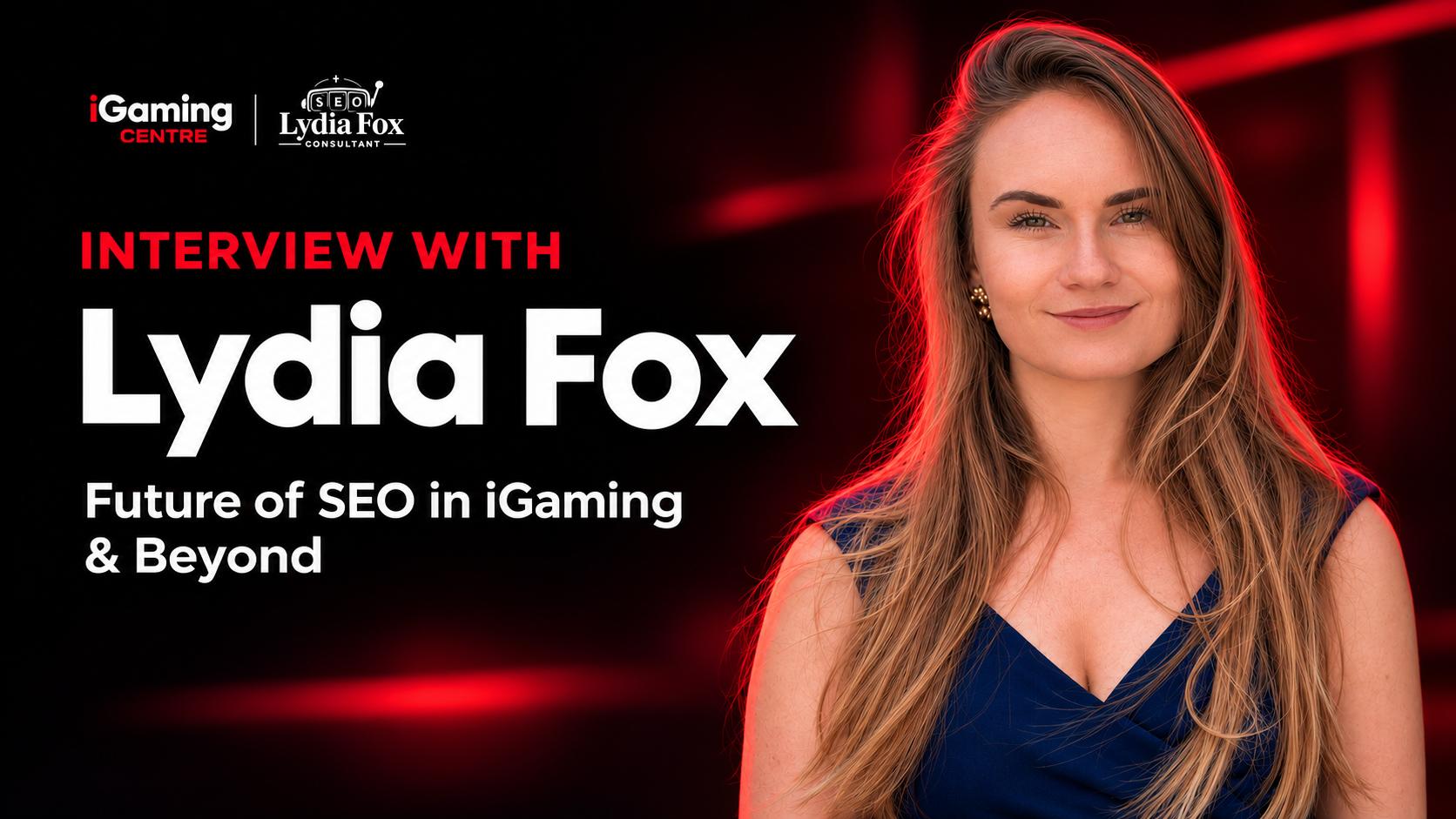
We are delighted to introduce our interview with Lydia Fox. She talks openly about leaving the agency world to prove she understands the bigger picture, about the "wild west" of gambling SEO, about the very different worlds of operators and affiliates, and about how AI is changing both her workflow and the industry itself. Whether you work in iGaming or simply care about where search is heading, her answers are well worth your time.
You run full-stack SEO for iGaming brands on your own, with no agency team behind you. How did you get here, and what were you doing before SEO?
Before SEO, I was organising music events, which taught me a surprising amount about marketing, sales, and thinking on my feet when everything is going wrong. I was constantly figuring out how to sell tickets, create demand, and convince people to buy.
I spent the first 4 years of my career at Atlas SEO, progressing from Outreach Executive to Senior and eventually Outreach Manager. I started developing SOPs and managing processes, but the more I learned about SEO, the more I wanted to understand everything beyond link acquisition.
I think there's a lot of stigma around being an SEO links person. You're often pigeonholed into specialising in a certain area or field, and because of that, I found myself consistently underestimated. I wanted to demonstrate that I understood the bigger picture, not just one part of it.
Going independent gave me the opportunity to do that. I can oversee the entire strategy, get involved in execution, and bring in external specialists where it makes sense. I don't think you need an entire agency team to deliver good SEO. You need someone who understands what they're doing and can get things done.
What first drew you to iGaming, and what's kept you there for six years?
I fell into iGaming SEO by accident through my first agency, where iGaming was their bread and butter before I even really knew what SEO was.
I've stayed because it's incredibly competitive. I quite often refer to it as the "wild west" of iGaming, and some of the sharpest and most creative SEOs I've encountered work in this space. You're constantly having to adapt, whether that's to algorithm changes, competitors or new ways of acquiring visibility.
It's also an industry where you can't really afford to be complacent because of how fast compliance and the search ecosystem change. I always think that if I can rank a site in gambling, I can probably rank anything.
What makes iGaming SEO harder than SEO in other industries?
You're playing hard in several directions. The budgets are enormous, competition is aggressive, and there's no shortage of people experimenting with grey-hat tactics.
You're also seeing increasingly aggressive approaches to negative SEO. One example I've been particularly interested in recently is the abuse of DMCA takedown requests. Across the industry, we're seeing reports of fraudulent copyright complaints being submitted against competing websites, sometimes using the names of legitimate companies or suppliers.
You also must be much more calculated with off-page strategy. There's a lot of transactional link building in this industry, where people are essentially sending spreadsheets of websites and prices without necessarily understanding why those placements make sense.
Buying links on iGaming isn't a secret. You see it everywhere, from everyone. Everyone knows it happens. What gets missed is that acquiring links and having an actual off-page strategy are two completely different things.
Digital PR can also be particularly challenging. Mainstream publications aren't always interested in associating themselves with gambling brands, so you need genuinely interesting stories, data, or research to get their attention.
You can't just follow a textbook's SEO strategy and expect to compete. You have to understand the vertical, the competition, and where you can actually create an advantage.
How different is the job when you're working for an operator rather than an affiliate?
Completely different worlds.
As an affiliate, you're essentially running a media business. You're capturing high-intent traffic, comparing brands and getting users through to an operator. There's generally more flexibility to experiment with landing pages, content, and different acquisition strategies.
Operators have a different set of challenges. You're dealing with legacy technology, compliance requirements, brand guidelines and product funnels where retention and LTV matter just as much as the initial acquisition.
The only difference here is when you're working with a start-up, which for me are some of my favourite clients to work with, as I have a lot more freedom and ability to shape the strategy from the get-go.
One interesting aspect of this discussion is how heavily some operators rely on affiliates for organic acquisition. Affiliates have historically delivered results, so while the established dependency is logical, there is a bigger opportunity to develop those acquisition funnels internally. Why pay a commission on every acquisition if you can build your own organic visibility and capture more of that demand directly?
That's not to say affiliates don't have a place. They absolutely do it. But I think operators should be looking more closely at how much of their organic acquisition they're outsourcing.
You've worked across markets from Nigeria to Australia and the US. What changes from one market to the next, and what stays the same?
The biggest mistake people make is assuming they can clone a website, translate it and expect it to rank.
Every market has different search behavior, competition, regulatory requirements, and commercial opportunities. You need to understand what people are actually searching for and what those searches are worth.
I personally like combining PPC and SEO research when evaluating a new market. Searching volume alone doesn't tell you much. You need to understand how well those keywords convert, the LTV of the players coming through, and whether the potential revenue justifies the investment.
You might find a market with enormous search volume, but if the traffic doesn't convert or the player's value is low, it might not be particularly attractive.
The fundamentals still apply everywhere: understand your audience, build a technically sound website and make sure you're targeting searches that matter to the business.
Which widely accepted piece of iGaming SEO advice do you think is wrong?
The idea that you should simply replicate your competitors' backlink profiles, or that off-page SEO starts and ends with acquiring links. Competitor analysis is useful, but blindly copying another website's links doesn't mean you're building the same authority.
I look at the intersection of topical relevance, anchor distribution, the pages receiving links and what Google is actually recognising the website you're gaining links for, topically.
There's also a tendency to obsess over high-DR links and exact-match anchors. I've noticed a particularly strong push towards exact-match anchors with the growing interest in GEO, and I think people are creating some incredibly unnatural patterns in the process.
Links obviously matter in iGaming. I'm not pretending they don't. But there's so much more to off-page SEO, including digital PR, brand mentions, entity associations and online reputation management.
You can spend tens of thousands on links, but if you're ignoring technical debt, cannibalisation and brand development, you're potentially just putting a sticking plaster over a much bigger problem.
How has AI changed your day-to-day work as an independent consultant?
It's changed quite a lot, particularly when you're working independently and don't have an entire team behind you.
I use AI to automate parts of my workflow, monitor changes, and make data analysis more efficient. I've also built custom tools to solve specific problems I encounter in campaigns, including an anchor diversification tool that analyses topical authority and the balance between informational and transactional anchor usage.
I also use AI to help monitor information and changes across different platforms, which means I can spend less time manually checking things and more time interpreting what matters.
I think the biggest benefit is that it allows me to operate more efficiently without having to outsource every small technical or analytical task.
That said, I do think AI is making parts of the industry lazier. There's a growing tendency for people to ask AI to do their SEO for them without necessarily understanding the recommendations they're being given, and fixing the AI changes is harder than getting it right in the first place. Diagnosing an issue properly is often much harder than implementing the fix. If you don't understand the underlying problem, AI can quite easily send you in the wrong direction.
How is getting a casino brand recommended by ChatGPT different from getting it ranked on Google?
I think people sometimes overcomplicate this.
Traditional SEO still matters enormously because AI search relies on information and brand signals that already exist across the web. However, I wouldn't assume every AI recommendation comes directly from Google's rankings or that all platforms retrieve information in the same way.
For operators, I think there's a particularly interesting opportunity. If someone asks ChatGPT to recommend a casino and your brand is surfaced directly, you potentially have a much shorter journey between discovery and acquisition.
For affiliates, I think the picture is more complicated. An affiliate might invest heavily in creating comparisons, reviews and recommendations that help establish a brand's visibility, but the user could ultimately receive that recommendation directly from an AI platform without ever clicking through to the affiliate. That creates an interesting attribution problem.
I think traditional SEO, digital PR, third-party mentions and brand reputation will all remain important, but businesses need to start thinking about visibility beyond simply where they rank in Google.
If an iGaming founder could only take one piece of advice from you about search, what would it be?
Stop treating SEO like a quick-fix traffic tap and start building an actual brand.
I think we're seeing a shift in what success looks like. Historically, you could generate enormous amounts of organic traffic through informational content, even if a lot of it had relatively low conversion potential.
I think SEOs need to become much more focused on high-intent searches and commercial value, even if the Google Search Console graphs don't look quite pretty.
The same applies to affiliates. I don't think affiliate SEO is dying. What's happening is that cookie-cutter websites that offer nothing particularly different from the hundreds of others out there are becoming increasingly difficult to sustain.
Anyone can buy links or churn out AI content. Building something people actually recognise, trust and actively search for is much harder.
Ultimately, I think businesses need to stop obsessing over traffic for the sake of traffic and start asking whether their organic visibility is actually contributing to the business.
Final Words
Lydia's story shows how far curiosity and independence can take you, and how much there is to learn in iGaming SEO beyond links alone. Her message is simple: understand the problem, think beyond quick fixes and build a brand people truly trust. Thank you, Lydia, for sharing your growth and challenges with us.
Related Articles
A Legal Guide for Operators: Building Consumer Trust Through Algorithmic and Regulatory Transparency
26 Jun 20265 min read